A Strategic Partnership and Award-Winning Debut
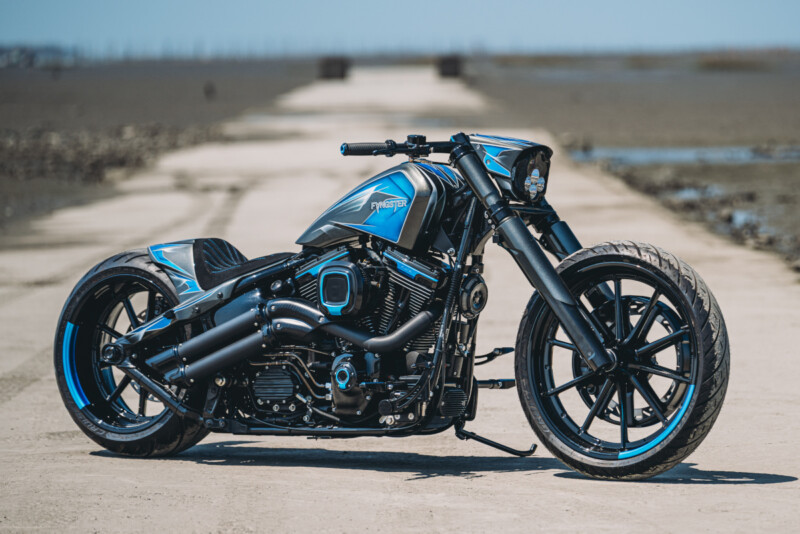
The original Harley-Davidson Softail Breakout was designed with a low, menacing profile inspired by 1950s and 60s drag bikes, rolling on a massive 240-section rear tire. Taking this long-and-low drag philosophy to the next level, Taiwanese custom parts manufacturer and bike builder Fangster recently teamed up with their new partner, Motorcycle Storehouse. To celebrate this distribution partnership, they built the “Rev Falcon”—a radical new-school bobber based on a 2016 Twin-Cam Softail Breakout. Designed by Rui-Ming Chiu, the machine was entered into the 2025 Speed & Crafts show, where it secured second place in the highly competitive Harley-Davidson class.
Architecture and the Illusion of a Rigid Frame
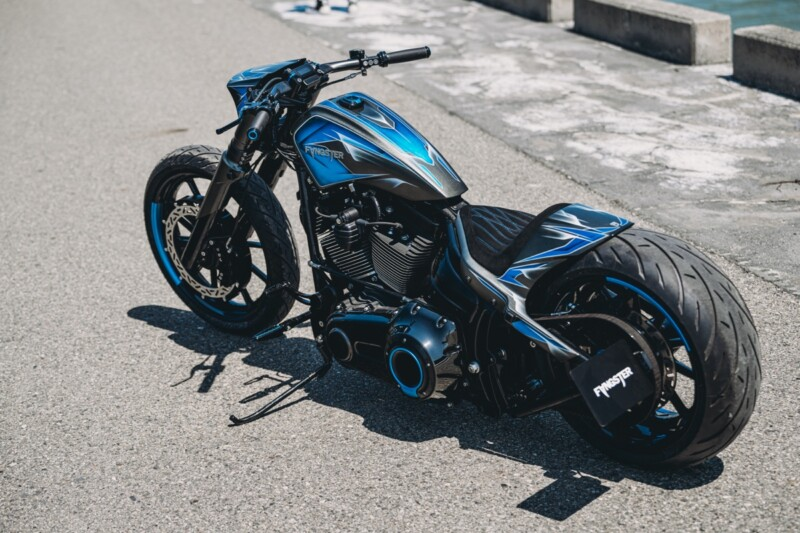
Fangster’s core design philosophy was to enhance the Breakout’s original silhouette rather than reinventing it. Chiu focused heavily on the bike’s long rake, wide rear tire, and low riding triangle to emphasize its drag-style roots.
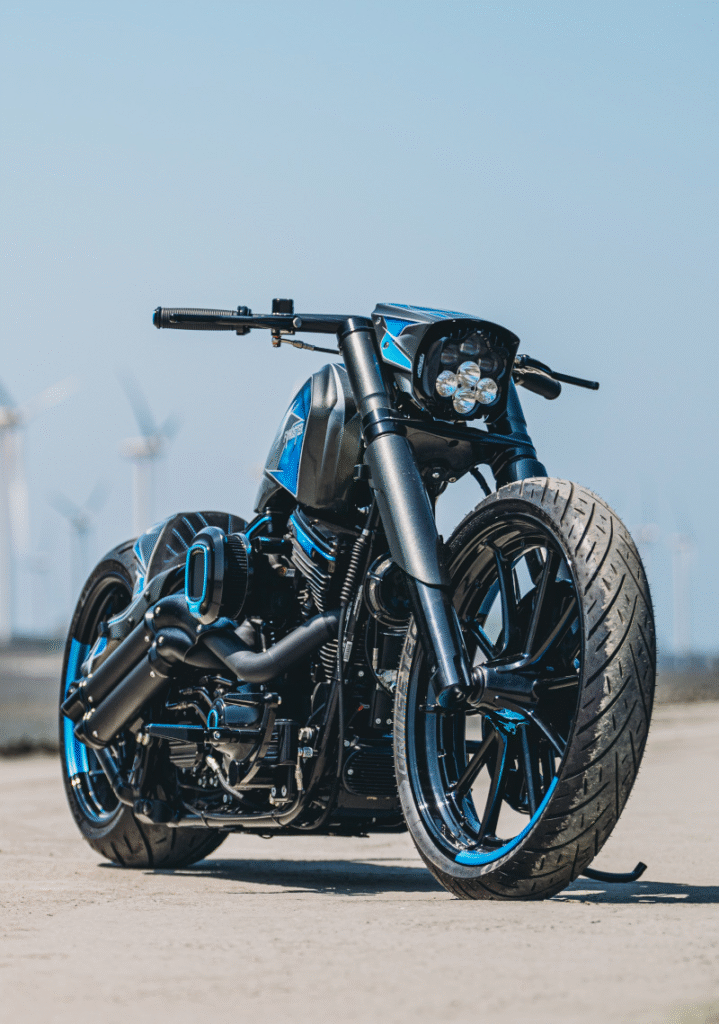
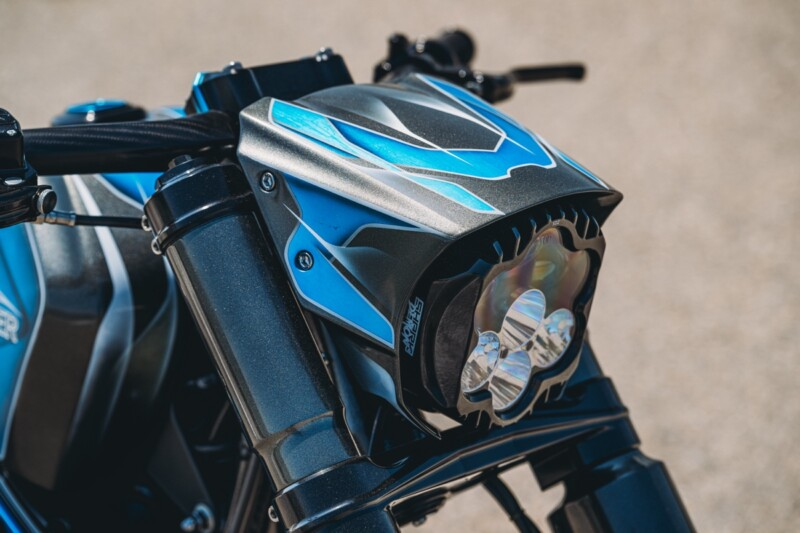
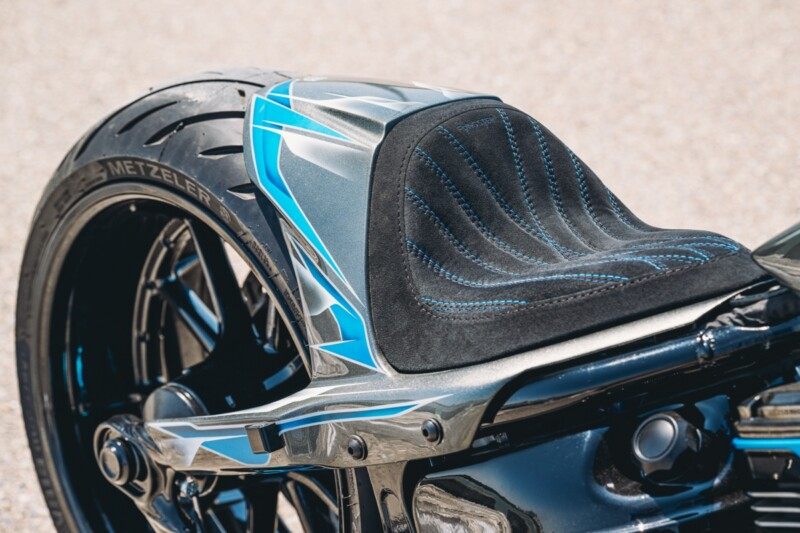
The custom bodywork—including the fuel tank, tail cowl, headlight shroud, and fork covers—uses surface lines that mimic the structural angles of the engine and frame. To amplify the clean lines of the Softail chassis, the team designed the tail cowl to partially overlap the swingarm, mimicking a classic hardtail frame modification where paint extends seamlessly across the metal. Because a Softail swingarm must move, Fangster installed a Legend air suspension system to precisely manage the swingarm height and maintain this perfect visual alignment.
Visual clutter was minimized by integrating Motorcycle Storehouse Fastline LED lights directly into one-off custom mounts, ensuring the lighting blends into the surrounding bodywork.
Streamlined Elements and Bicycle-Inspired Controls
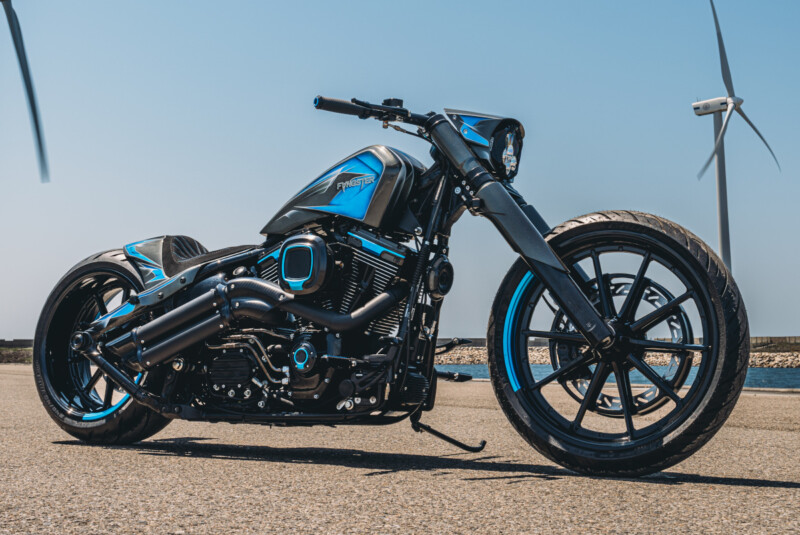
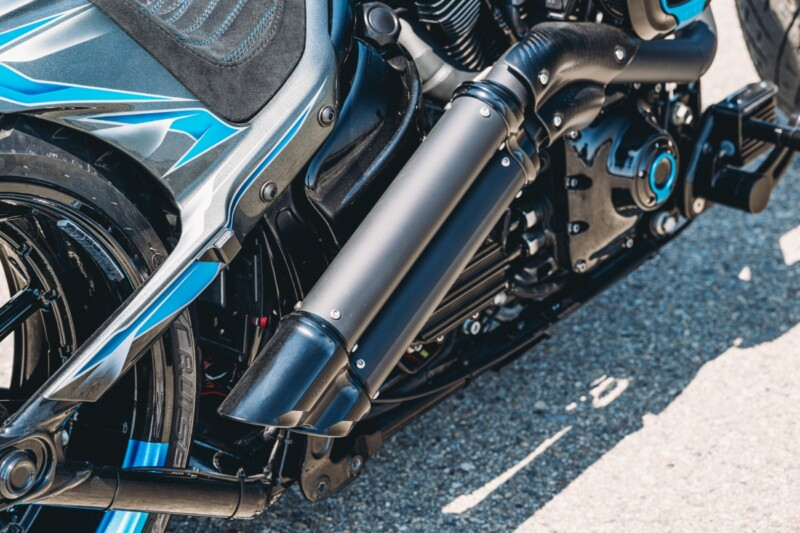
The exhaust system was intentionally kept subtle to act as a supporting, visual guide rather than a loud statement piece. The pipes were shortened as much as possible to reduce mass, finishing with a CNC slash-cut tip that matches the body lines. Above it sits an Alcantara seat featuring a three-color stitching pattern that follows the lines of the fuel tank. Breaking away from traditional full-diamond stitching, the pattern is confined to the front half of the seat, leaving the rear open for an engraved Fangster logo.
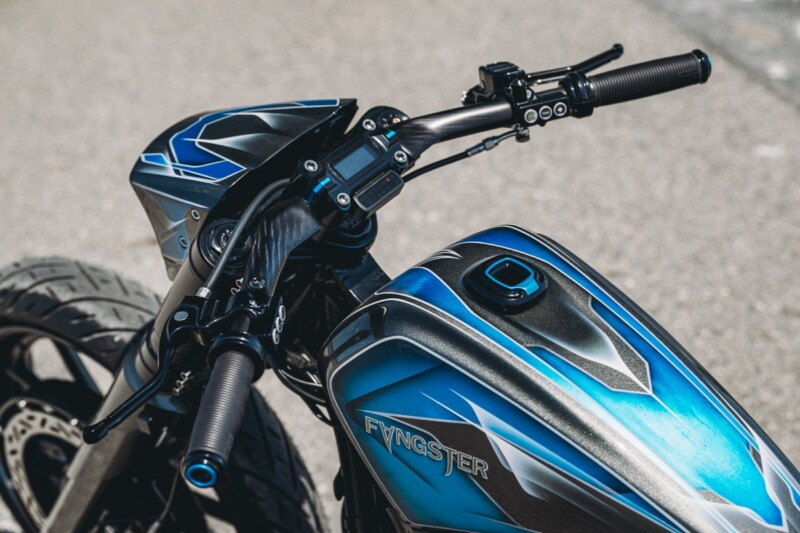
At the cockpit, the aerodynamic handlebars find their inspiration in modern road racing bicycles to project a sense of speed. While Fangster plans to mass-produce these bars in full carbon fiber, the bike currently features a prototype made from narrower, one-off stainless steel that was 3D-printed into an aero shape and wrapped in carbon fiber cloth. Positioned in the riser is a Koso D2 speedometer, which brings a modern touch while simplifying the overall view.
Intricate Wheel Packaging and Braking Technology
Fangster retained the original wheel and tire configuration, but utilized 3D scanning and reverse engineering to overhaul the braking layout and clean up the wheel aesthetics.
- Rear Braking: They engineered a highly precise pulley-brake mechanism fitted into the extremely narrow space of the stock Breakout wheel, pairing a one-off rotor with an Arlen Ness six-piston caliper to fully expose the width of the rear tire.
- Front Braking: The front wheel utilizes an Arlen Ness eight-piston inboard brake, featuring a completely redesigned rotor carrier custom-made to match the exact spoke count and design of the factory wheel.
Built to Defy
Ultimately, the “Rev Falcon” doesn’t just modify a Harley-Davidson Breakout—it refines its aggressive DNA. By balancing reverse-engineered tech with jaw-dropping artisanal paint, Fangster took an iconic factory cruiser and elevated it into a raw, cohesive masterpiece of modern industrial art.
🔗 Fangster | @fangster_official