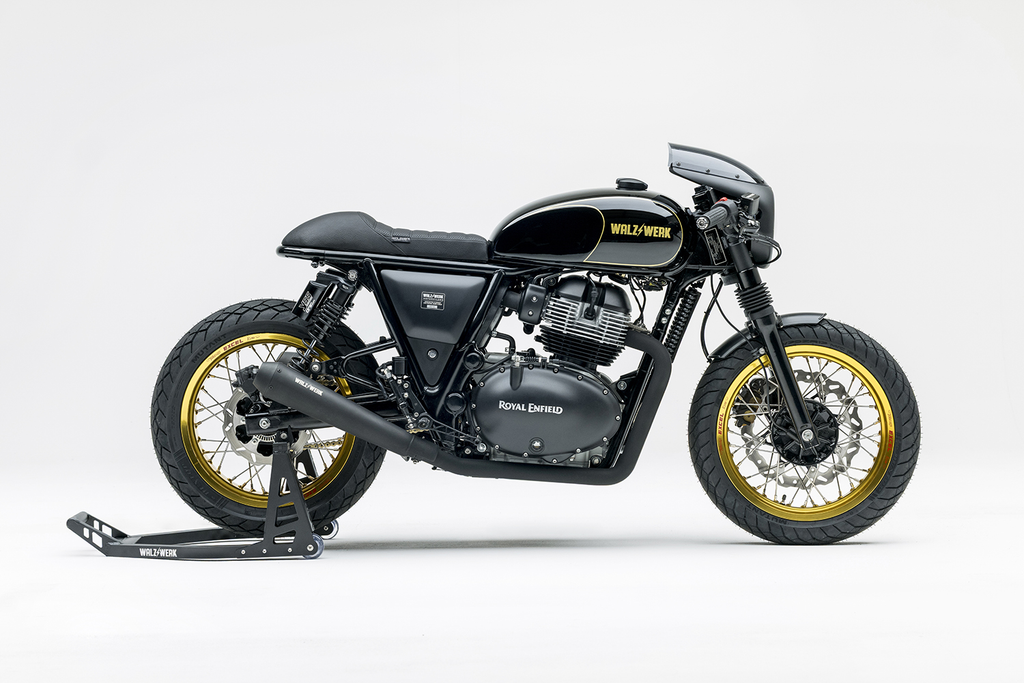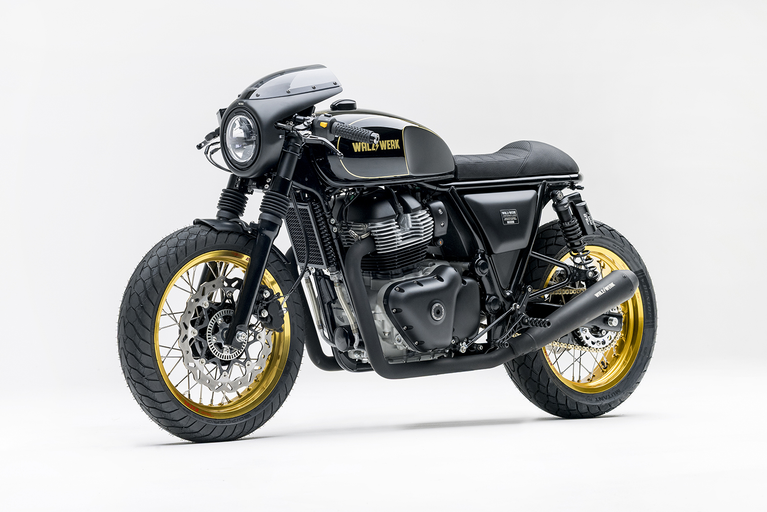
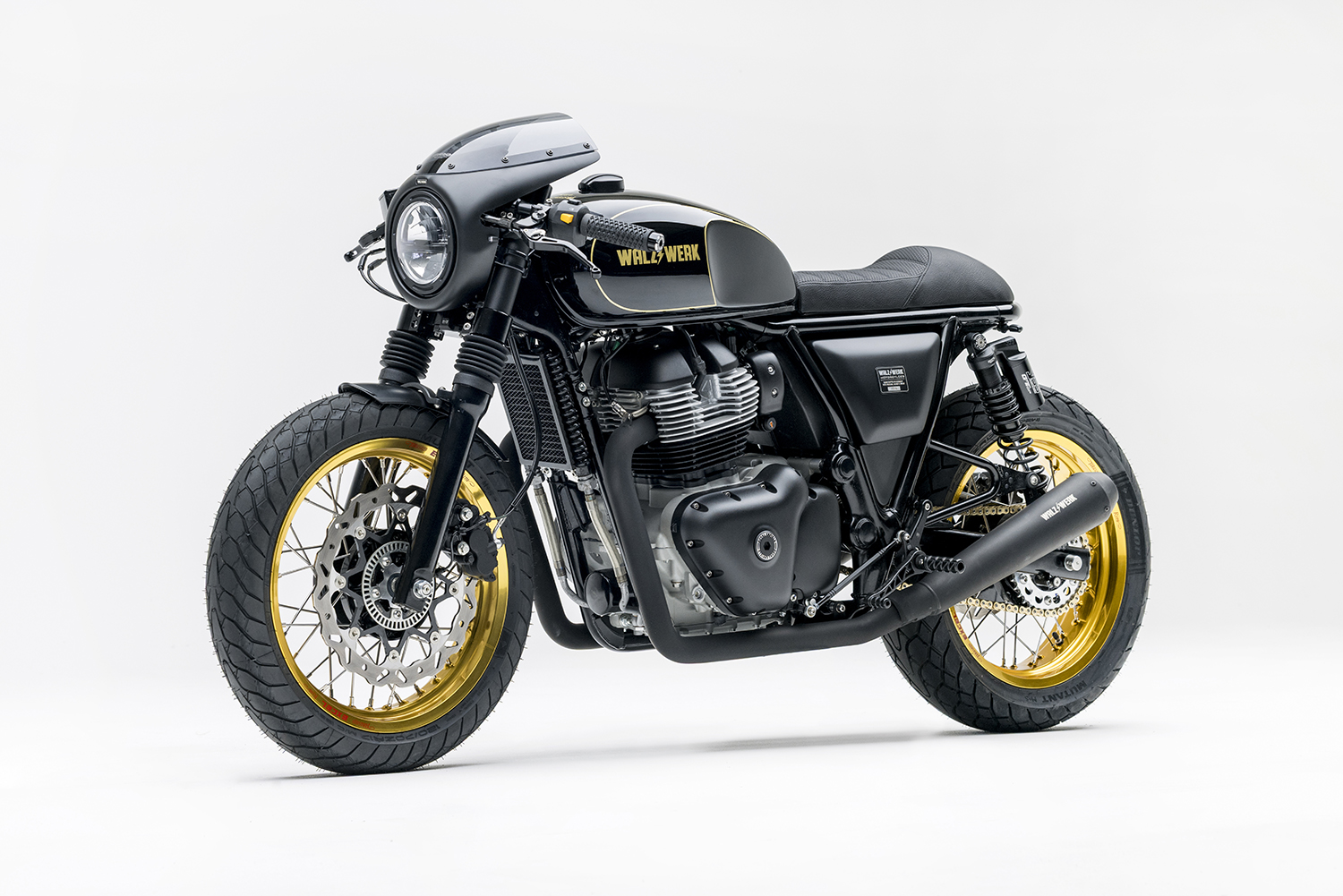
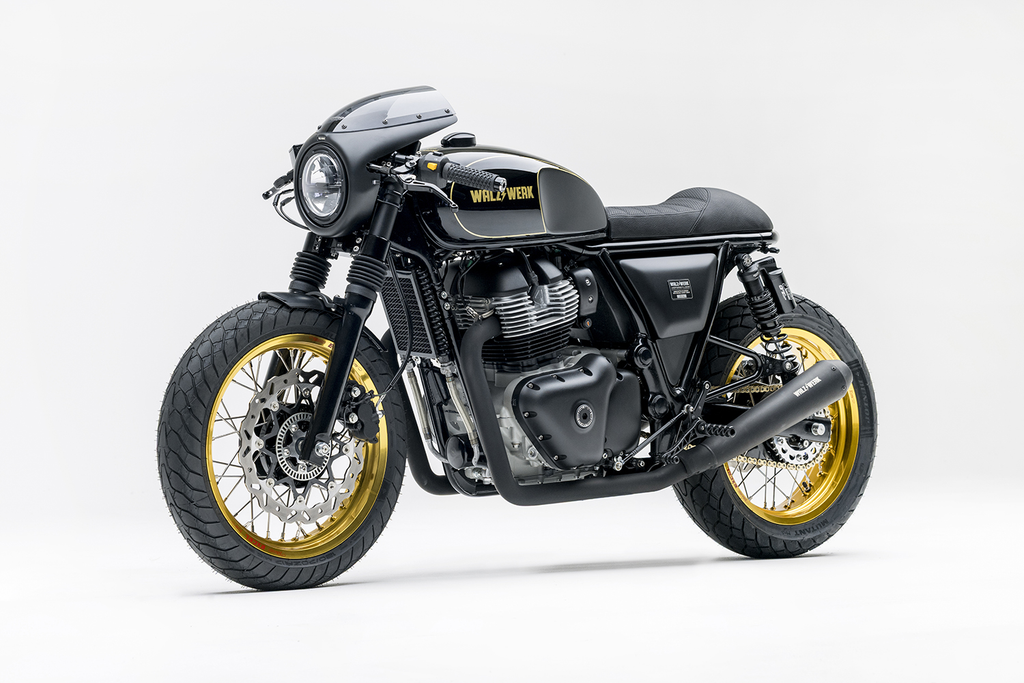
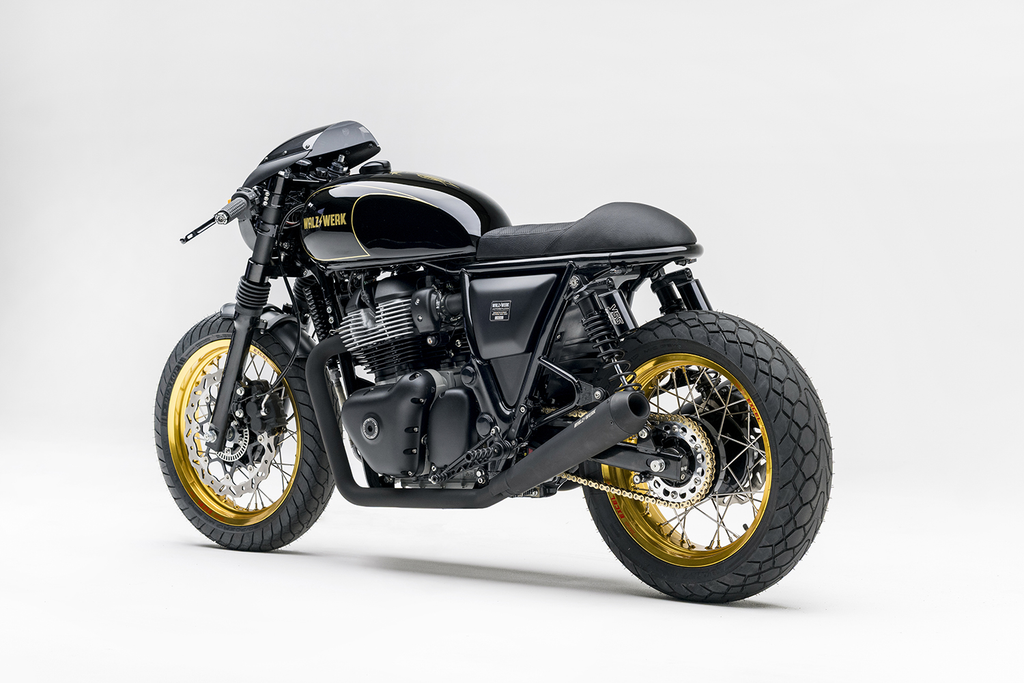
Marcus Walz has spent decades building a formidable reputation, largely through high-end, big-budget BMW custom motorcycles. However, for this project, the German builder shifted his focus toward a highly accessible platform: the Royal Enfield 650. Rather than simply applying cosmetic bolt-on parts, the WalzWerk team approached the build with a focus on altering the motorcycle’s inherent geometry and stance to achieve a genuine, well-proportioned café racer profile.
Chassis and Geometric Revisions
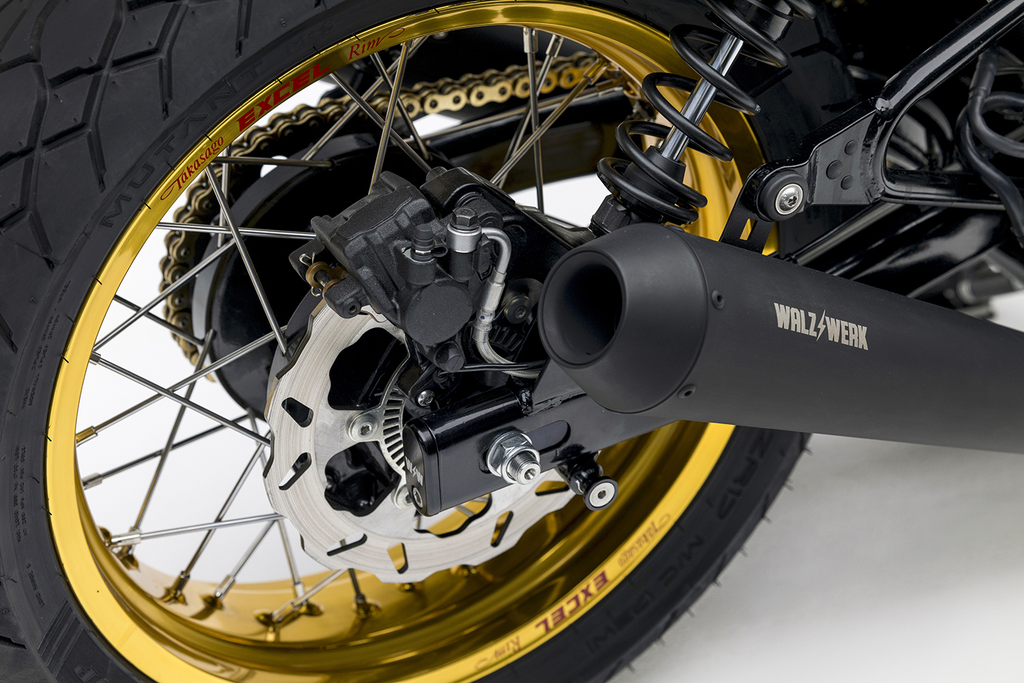
The most impactful changes to the Enfield happen close to the ground. WalzWerk discarded the standard 18-inch factory wheels, replacing them with a pair of gold Excel rims—a 3.00×17-inch unit up front and a wider 4.25×17-inch at the rear. These are wrapped in Dunlop Mutant tires (120/70 and 170/70, respectively).
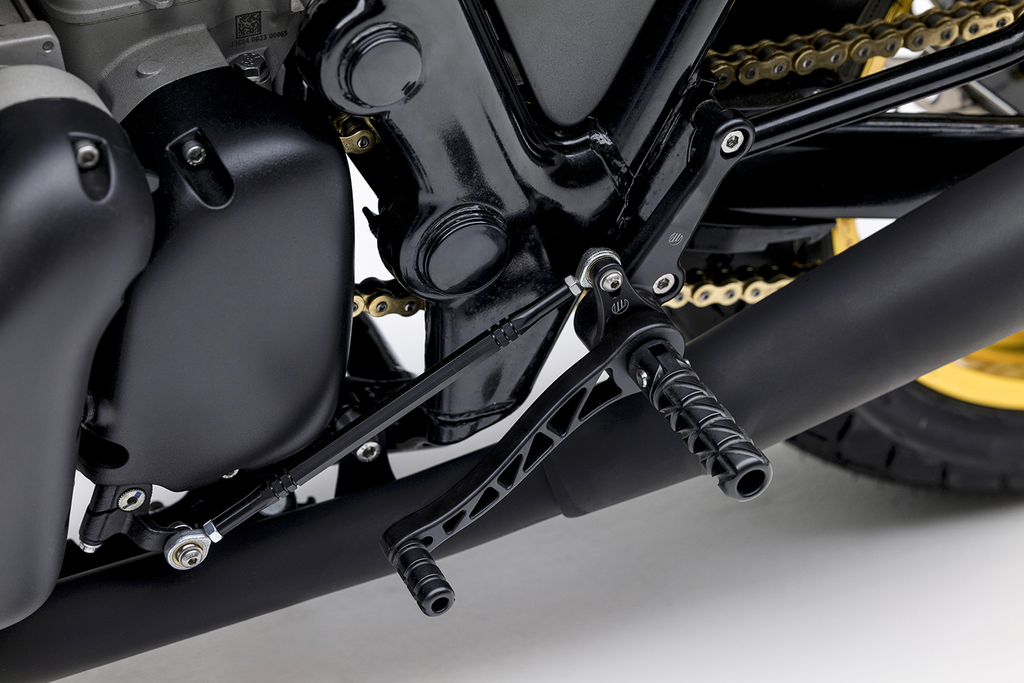
Fitting a wider rear wheel without compromising the drivetrain required converting the bike to a narrower 520 chain setup, which includes a custom aluminum racing sprocket. However, dropping the bike onto smaller 17-inch wheels and shortening the front end risked giving the machine a squashed appearance. To counteract this, WalzWerk extended the swingarm by approximately 25mm and fitted proprietary CNC-machined chain adjusters, granting the motorcycle a longer, lower stance.
Suspension and Braking Upgrades
To match the revised chassis geometry, the suspension was completely overhauled. The conventional factory forks were retained but shortened by about 50mm. Internally, they were rebuilt with progressive springs and capped with new external preload adjusters.
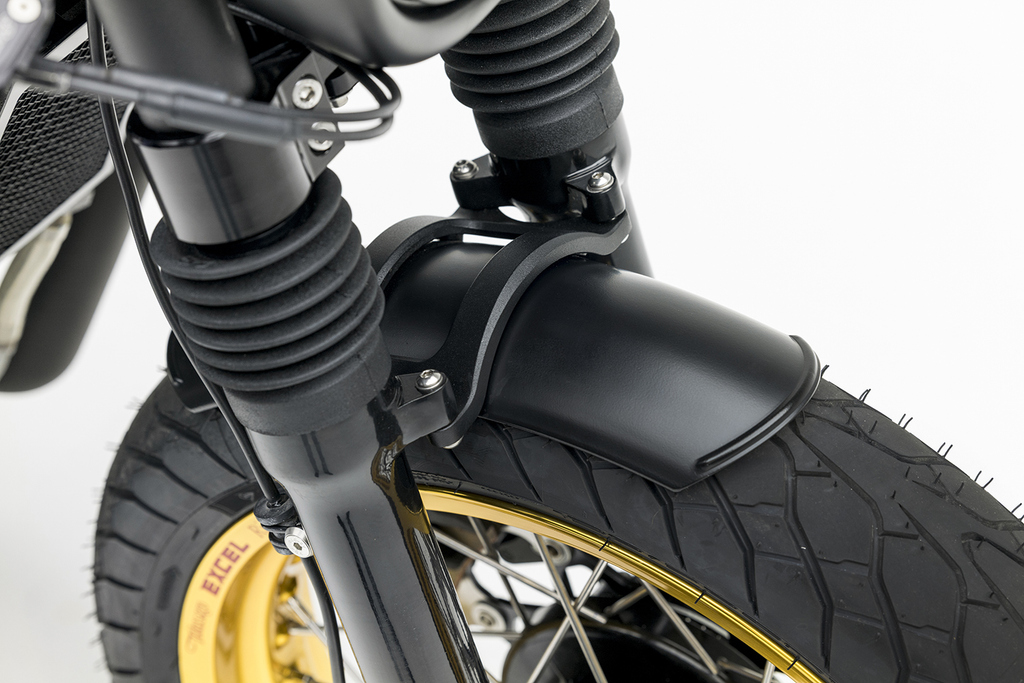
At the rear, the budget-friendly factory shocks were swapped for YSS piggyback units. These provide full adjustability for ride height, compression, and rebound, allowing for precise chassis tuning rather than just a cosmetic drop. Braking reliability was also addressed, with the standard setup receiving Galfer wave discs and Brembo sintered pads.
Streamlining the Profile
Aesthetic modifications were strictly tailored to the café racer ethos. The factory tail was removed and replaced with WalzWerk’s own subframe and a neatly trimmed saddle. This creates a single, uninterrupted horizontal line that flows from the nose of the fuel tank straight through to the rear wheel.
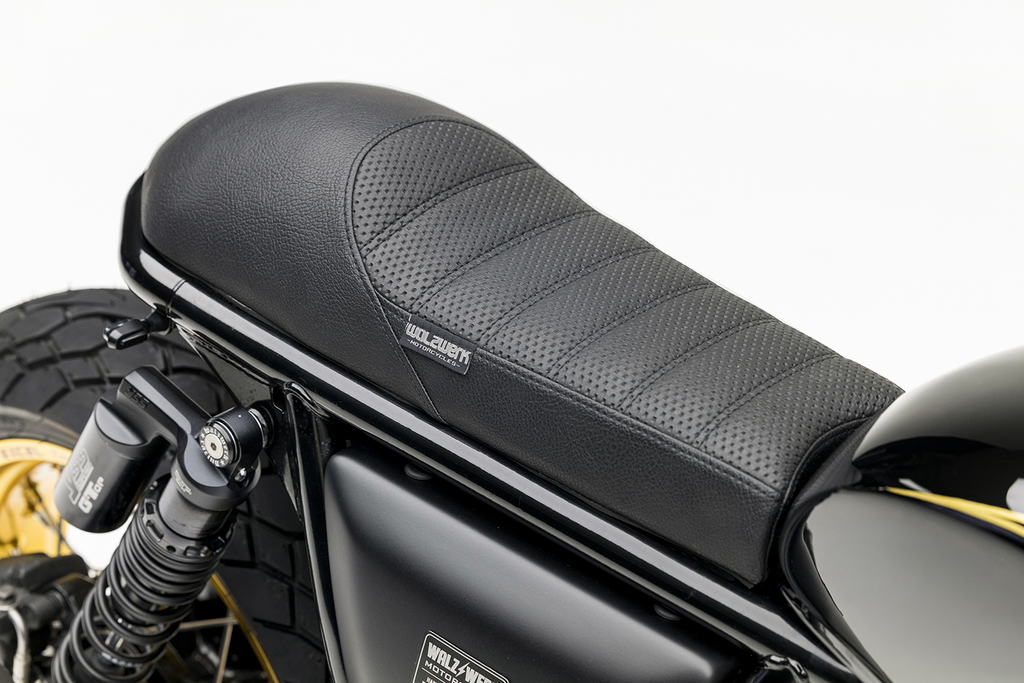
The color palette is deliberately dark, featuring black paint and blacked-out engine cases that contrast with the raw alloy cooling fins. To prevent the bike from looking entirely monochromatic, visual breaks are provided by gold hand-laid pinstriping, matching WalzWerk graphics, the gold chain, and the gold Excel rims.
Cockpit and Exhaust
The front end of the motorcycle was aggressively decluttered. The factory ignition switch was entirely removed and relocated to a dedicated bracket beneath the left-hand throttle body. Similarly, the twin horns—usually mounted prominently in front of the cylinder head—were hidden out of sight underneath the fuel tank.
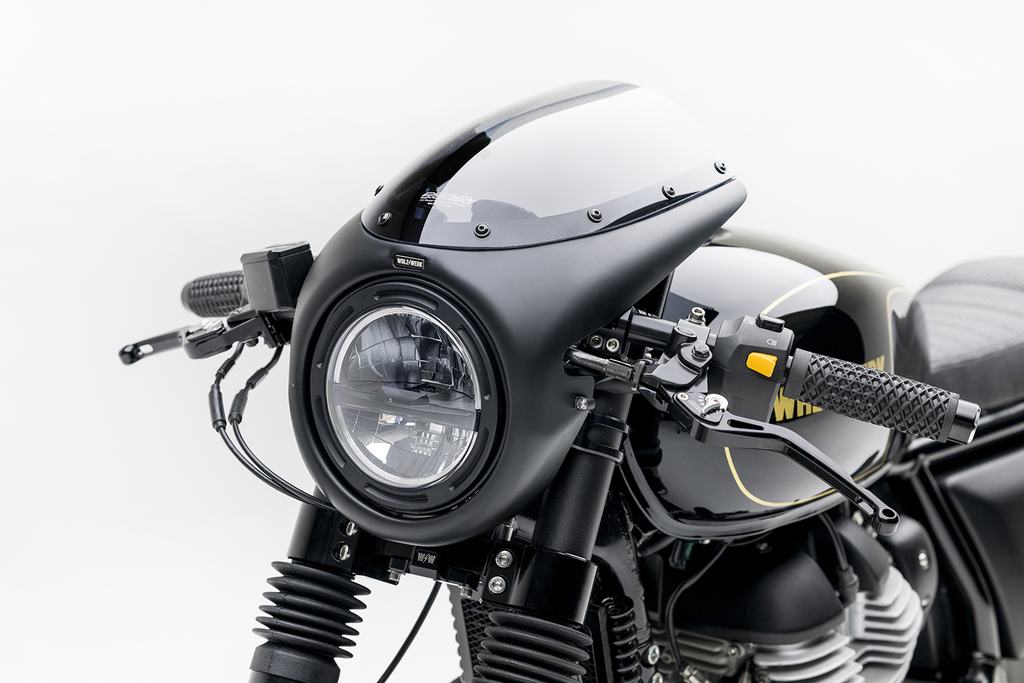
Up top, a bespoke CNC-machined solid aluminum upper triple clamp cleans up the rider’s view. It is paired with low-slung clip-on handlebars, fully adjustable CNC clutch and brake levers, and a tiny analogue instrument tucked behind a tinted screen. Lighting is handled by an LED lamp housed in a small WalzWerk fairing.
To complete the build, the engine breathes through a twin-silencer exhaust system. While buyers can opt for brushed stainless steel, this particular machine features a black ceramic finish that visually disappears into the frame, ensuring the mechanical layout remains the true focal point.
🔗WalzWerk Motorcycles | @walzwerk_motorcycles