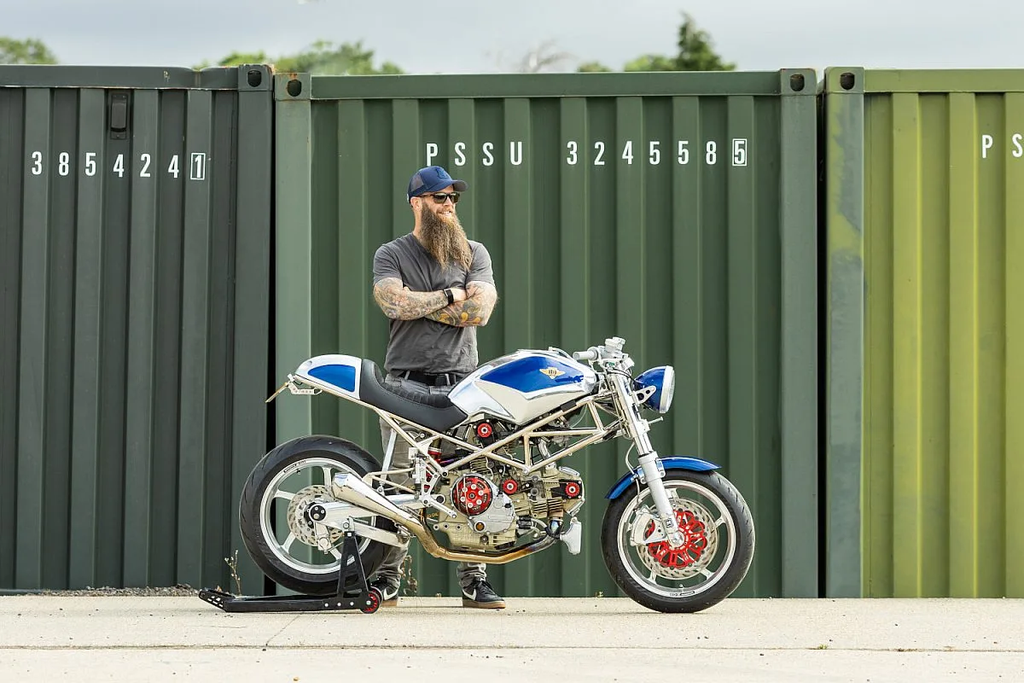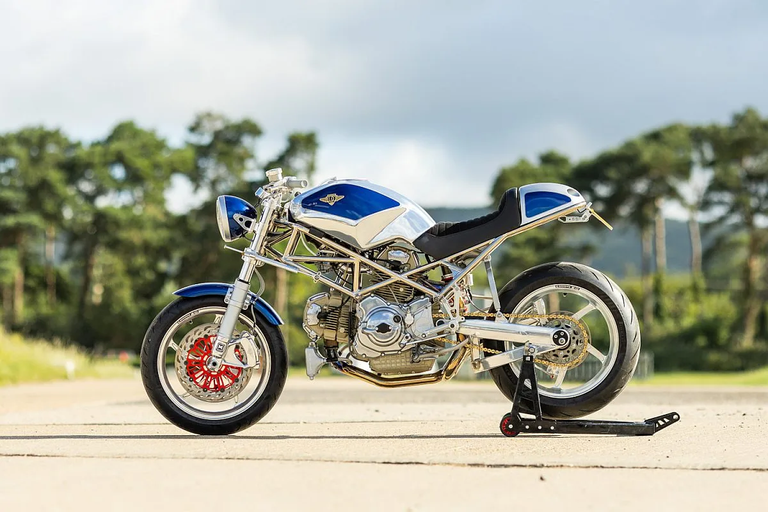
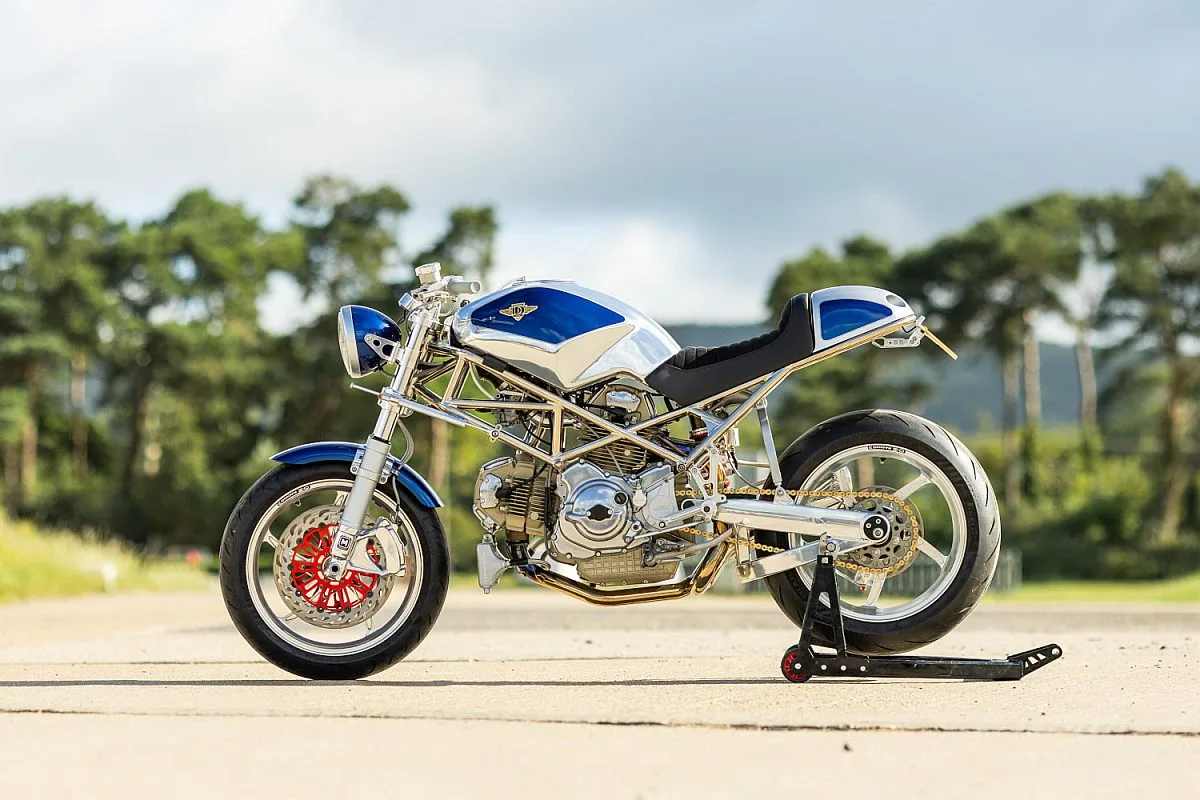
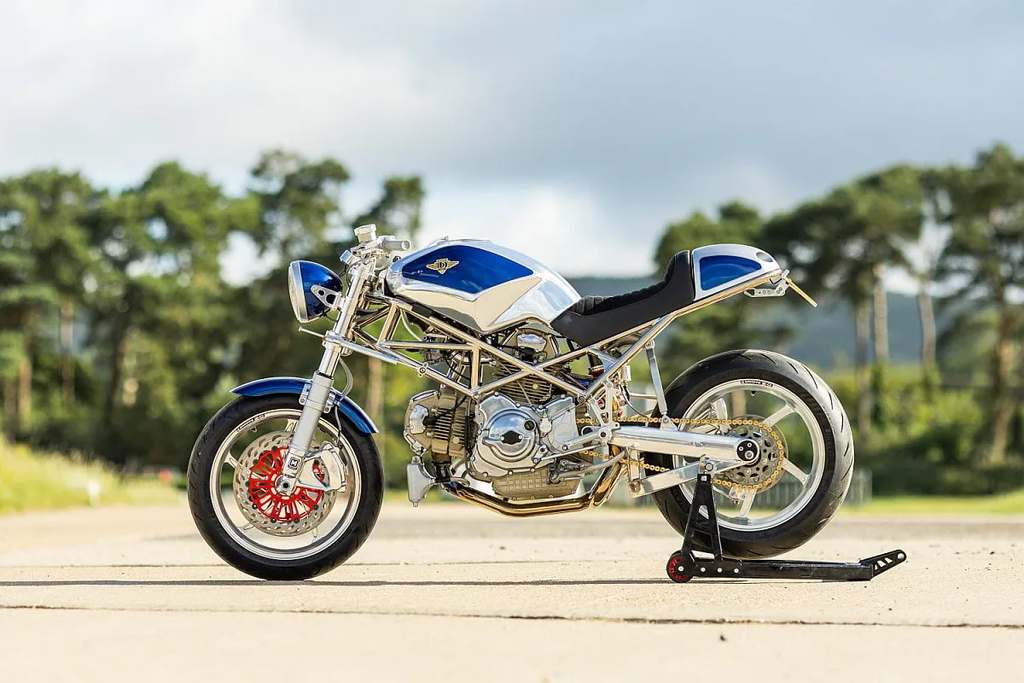
UK-based builder Rick Hannah of Dirty Dick’s Motos concludes his local operations with the comprehensive rebuild of his personal 1999 Ducati Monster 900S. The project focused strictly on weight reduction, chassis optimization, and a complete electrical overhaul while retaining the model’s original silhouette.
Chassis and Bodywork
The factory steel trellis frame was shaved of all extraneous tabs and brackets, hand-polished, and nickel-plated. The original chassis geometry was left untouched, but the rear subframe was narrowed, chopped, and looped to accommodate a single-seat configuration and a custom fiberglass tail section.
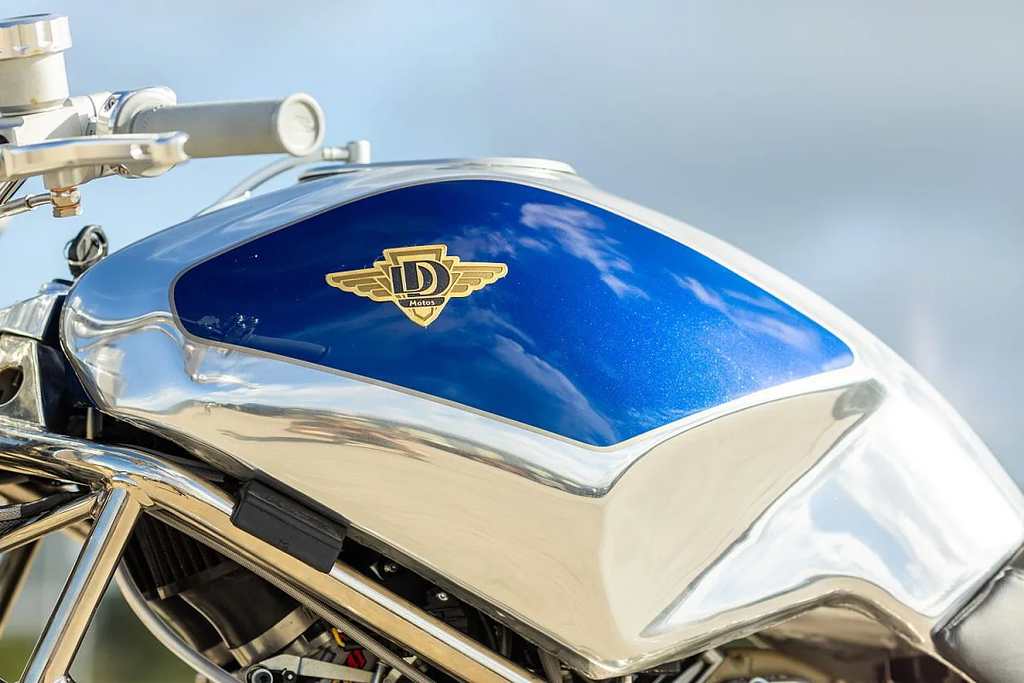
The standard fuel tank was replaced with an aftermarket RoadRacing aluminum unit. In addition to reducing weight, this tank features a narrower, deeply sculpted lower section that exposes the vertical cylinder head. At the rear, the factory swingarm was swapped for a braced Metmachex aluminum unit, which incorporates an internal chain-adjustment mechanism.
Engine and Powertrain
Mechanical reconstruction was handled by Ducati specialist Ray Petty. During the planning phase, a 1000cc big-bore conversion with aggressive camshafts was explicitly rejected to prioritize mechanical viability and long-term reliability.
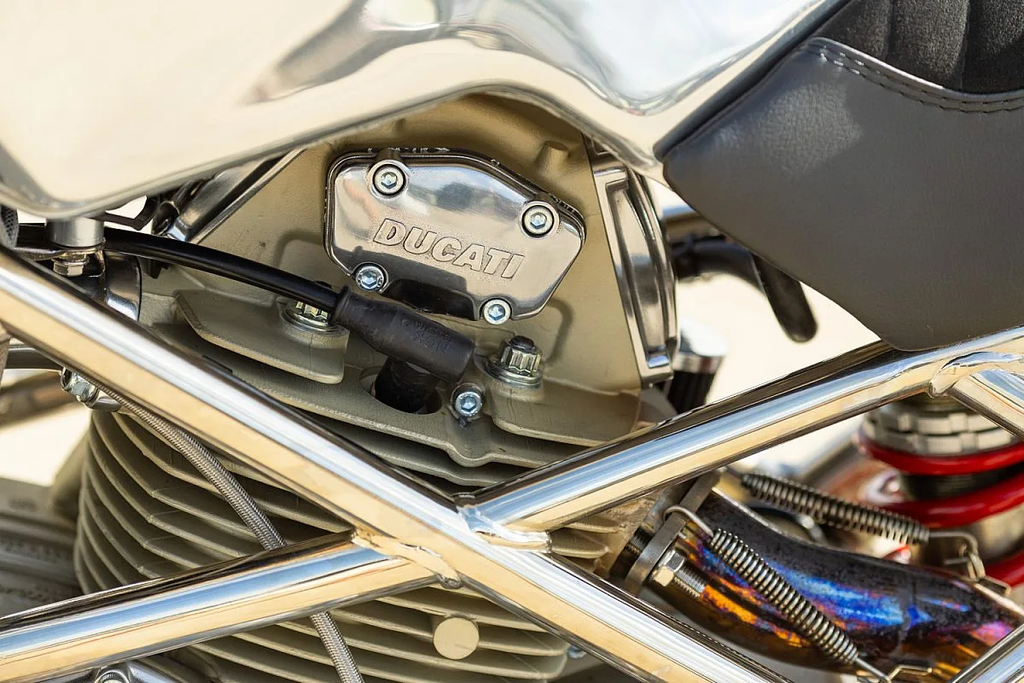
Instead, the build focused on rotational mass. The engine was fitted with a Nichols lightened flywheel, and the crankshaft assembly was blueprinted and balanced. Fuel delivery was upgraded to a set of 41mm Keihin FCR flat-slide carburetors equipped with accelerator pumps and K&N pod filters.
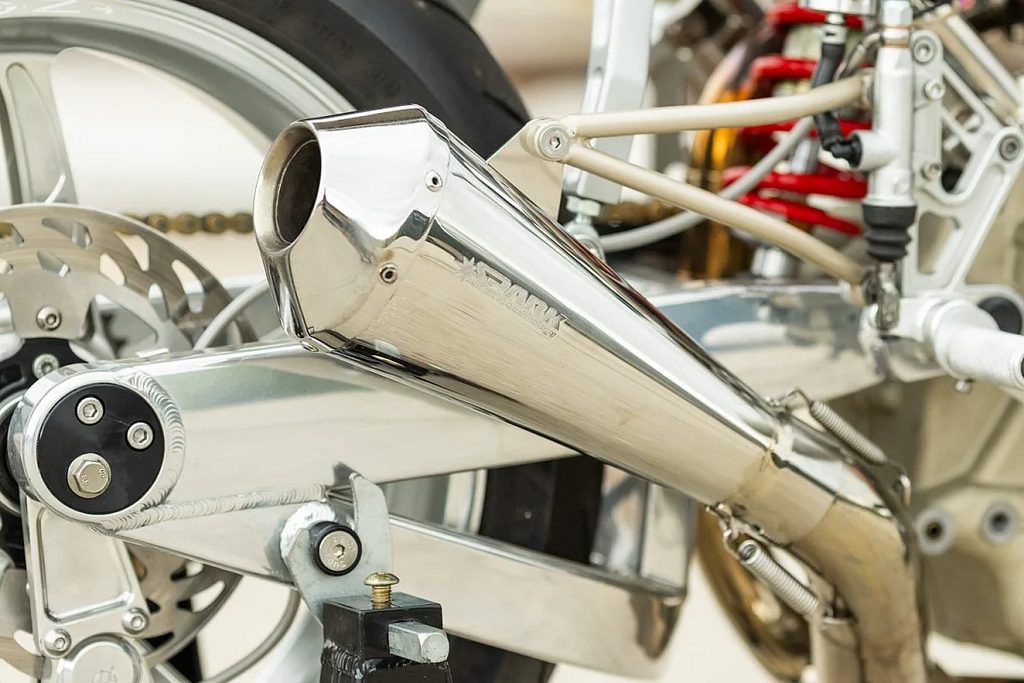
Exhaust routing is handled by a 50mm thin-wall, stainless steel Sil-Motor two-into-one header system terminating in a Spark silencer. The entire exhaust system weighs approximately 3 kilograms. Cooling was improved by mounting a RedFox Grinta oil cooler lower on the horizontal cylinder head, minimizing braided line routing. Externally, the engine cases received a ceramic coating formulated from a 75% bronze and 25% nickel blend.
Suspension and Braking
To mount radial brake calipers without utilizing a modern inverted fork that would alter the motorcycle’s 1990s aesthetic, the builder sourced a conventional telescopic fork from a Honda CB1100RS. The stanchions were shortened by one inch to match the Ducati’s original geometry and fitted with fully adjustable custom internal cartridges by Maxton. The lower castings feature a dual ceramic-coated and mirror-polished finish.
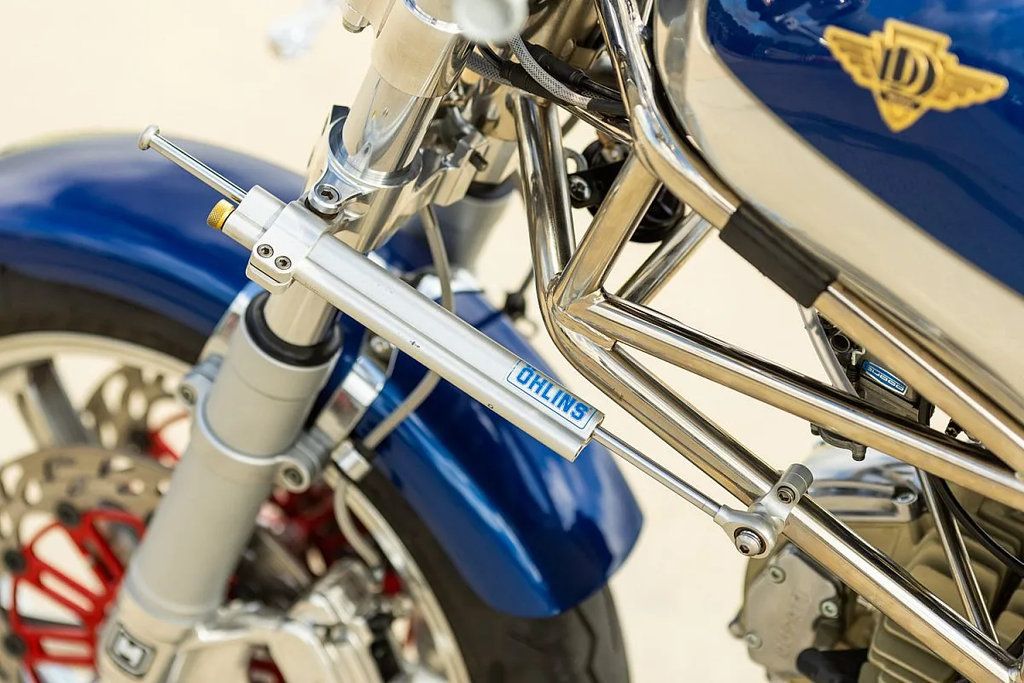
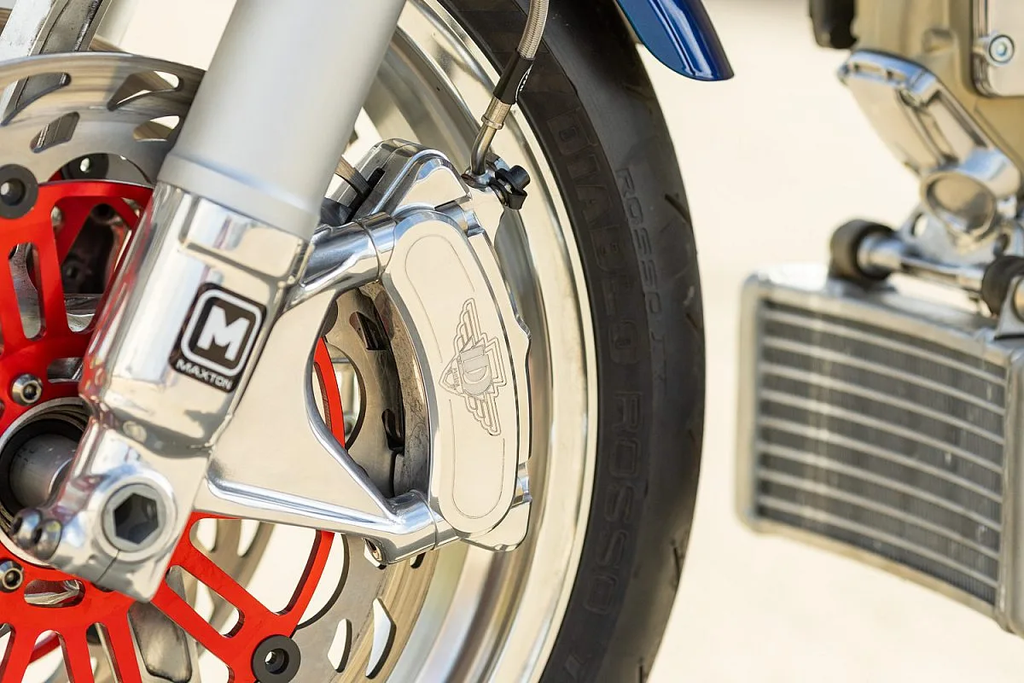
The factory alloy wheels were replaced with forged aluminum OZ Piega rims wrapped in Pirelli Diablo Rosso IV tires. This upgrade directly reduced rotating, unsprung mass by 3 kilograms. At the rear, the ‘S’ model’s original Öhlins shock was fully rebuilt, and its remote reservoir line was extended to allow the canister to be hidden inside the custom tail hump.
Electronics and Controls
To eliminate the reliability issues common to 1990s Ducati wiring, Mono Cycles fabricated a bespoke wiring harness. It is routed entirely internally through the handlebars, top triple clamp, and frame tubes. Auxiliary safety lockouts, such as the sidestand and clutch switches, were deleted.
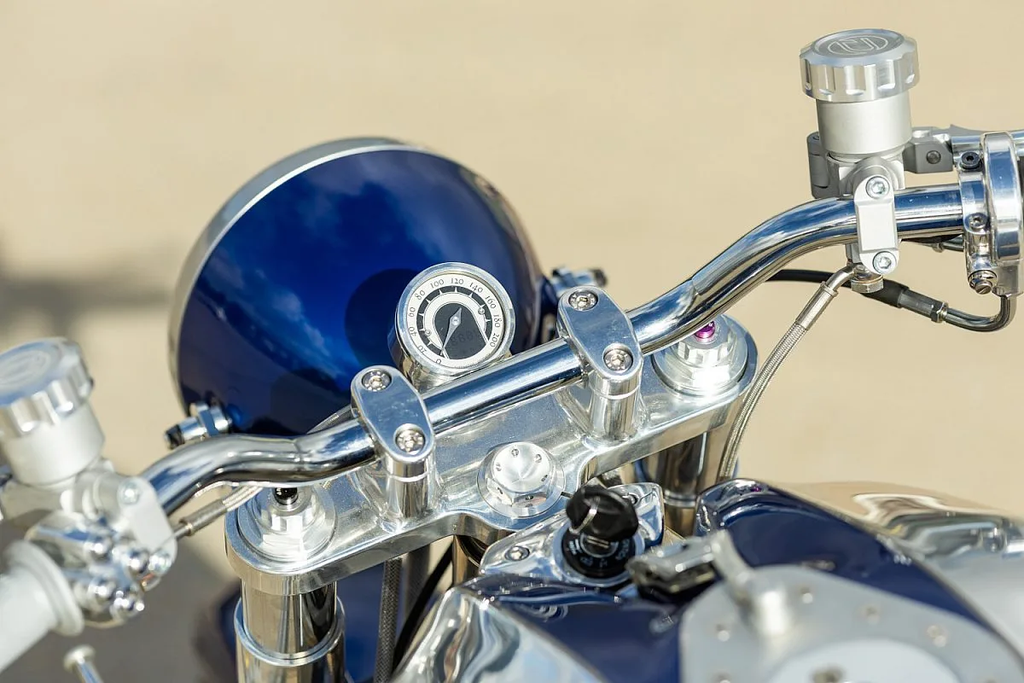
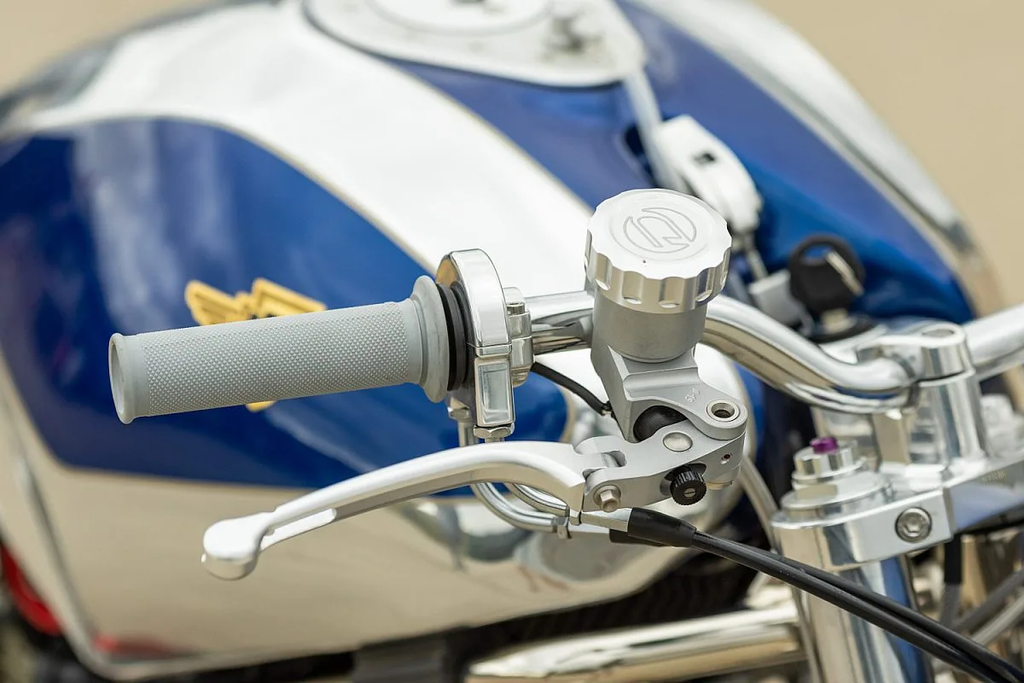
The core electrical system is now built around plasma ignition coils, an Ignitech programmable ECU linked to the FCR carburetors’ throttle position sensor, a Joost B-Box control module, an Antigravity lithium battery, and a MOSFET regulator-rectifier. All electrical hardware is consolidated in a custom tray beneath the fuel tank.
The cockpit utilizes a Motogadget digital speedometer powered by a GPS receiver, enabling the removal of the mechanical front-wheel speedo cable. The starter button is integrated into the billet throttle housing, and a single four-button switchgear on the left perch operates all remaining functions. The left horn button is wired to illuminate orange, functioning as a low-fuel warning indicator.
The Finished Machine
The completed Ducati Monster 900S serves as the final project to exit Dirty Dick’s Motos’ UK workshop. Representing the culmination of a 16-year iterative process, the motorcycle demonstrates a strict engineering focus on unsprung weight reduction, modernized electrical reliability, and dynamic balance over raw power increases. Ultimately, the build stands as a mechanically refined evolution of the 1999 L-twin platform, achieving updated performance metrics while strictly preserving its original structural geometry.